Tuesday, 20 October 2015

Production Log one BSR


Production Log One
During this week us students learnt and analyzed specifically what creates a convenient opening sequence for our British Social Realism films (BSR). We closely examined a students previous work and were told to write down the strengths and weaknesses of each British Social Realism opening film, also to give a grade based on what we thought from the opening scene. This exercise helped us as we were enabled to understand how our work will be examined and marked, and we were also able to get ideas from the past students work and production. Also this helped us because we now understand what we need to include and think about when we film and edit our own opening scene. The sound and use of graphics seemed to be the main problems that we found from the students work. In reference to this, I will think heavily on getting theses 2 aspects of my opening correct.

Also We looked at another 2 examples of British Social Realism films and scrutinized them as well. We looked closely at color palettes, actors, era, production design and lighting . All of these must be considered and shown when making our opening 2 minutes of a BSR film, as they are imperative details which make a BSR film look realistic and worth watching.


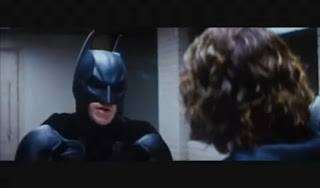
My brother the devil

My Brother The Devil


Saturday, 10 October 2015

Continuity editing workshop Year 12 AS

Continuity Editing Workshop Year 12 AS

                               Production logo: J.E.T
J(ack) E(mmanuel) T(oby)

Film title:

The idea:

The initial idea for my short film is very peculiar and unique, as it shows an encounter of someone coming home to their identity being completely stolen. For this short film we wanted it to be different to other films. The character Stephen comes home to his identity being stolen, as Stephen enters his house, he finds his friend Keshav sitting down in his house out of nowhere. To subsequently find out, that Keshav is the culprit for his identity being stolen.  There was a few lines of dialogue between Stephen and Keshav. We were enabled to have as much freedom as possible with this short film and the idea for it, so we decided to make it as strange as possible to intrigue our viewers.

The dialogue that occurs between the two characters Stephen and Keshav brings the humorous side to the short film, in the way that Keshav suddenly takes over Stephens whole life, but in the real world, it is a serious issue.

Camera shots & Techniques:

When referring to camera shots and techniques used in out short film, we wanted to use a large variety of relevant camera shots and techniques, not just a dozen pointless techniques and shots for no reason. In specifics we used appropriate close ups when we needed to captivate the characters facial expressions and reactions. We used a close up shot to show Stephens reactions when he first encountered Keshav, So the audience can see Stephens feelings about Keshav being in his house. Another example of a camera shot is long shot, this was used to show the characters body expressions and hand gestures for example when Stephen dropped the letters on the floor, this shows that he was in shock. At the beginning of the film we used the low angle camera shot to emphasize how Stephen is feeling, specifically connoting him feeling happy and content.


This low angle shot highlights the characters happiness in a positive light, as we also attempted to show this through are short film


As the film progresses we no longer used anymore low angle shots, as you can clearly see that the atmosphere and mood changes to a more dark and sombre tone, as Stephen suddenly finds Keshav unknowingly.

In terms of camera techniques we used shot reverse shot at Frames 8-10 and 14-15, to capture the response of each individual character. When shot reverse shot is first used the two characters have no dialogue, so the audience is able to analyse the reactions of both characters seeing eachother, this adds intensity and tension between the characters and audience, as the audience almost feels as if they are in the scene with both characters. The technique match on action was simply used as Stephen enters the door at frame 4-5, this is a simple and effective way of engaging with the audience, as the viewers can see Stephens actions.

Props and Location 

In our production for the short film we did not require many props. The only props used was to sort out were the cut outs of Keshavs face for the photos and some fake letters. These were not hard to do as all we had to do was print out some photos and make them look rushed to tape onto the photos. The location wasn't very complex or complicated, we simply filmed at Stephens house, which was not hard to show in our short film.

Music


The only sense of music used in our short film is at the beginning when Stephen is walking towards his home. Stephen has his headphones in and we directly want the audience to hear what he is listening to, so they are not left in an awkward silence. As he approaches the door he takes his headphones out and at this point we will dim the volume of the music, to simulate the same effect Stephen would get. We feel this will make the audience feel like they are right there next to him. For the rest of the scene, there will be total silence, this adds uncomfortable silence before the dialogue starts. This emphasises the dark tone that the film is based on. While the dialogue adds the comedic value.


The Script


Stephen is walking home from work

Diagetic sound:Music plays through Stephens headphones then quietens and cuts out.

Opening of the front door and closing

Turns on lights and flicks through pile of letters

Stephen is surprised by Keshav

Stephen: What are you doing here? (directed at Keshav)

Stephen sits opposite Keshav

Keshav: The question is....What are you doing here?

Stephen: What do you mean?

Keshav: Take a look around

Stephen looks around the room and see's the family photos

Keshav: I think its about time you leave...don't you?


Thursday, 1 October 2015

Edit workshop Evaluation

Edit Workshop Evaluation

How did you use 180 degree rule, rule of thirds, match on action and shot reverse shot?


180 degree rule


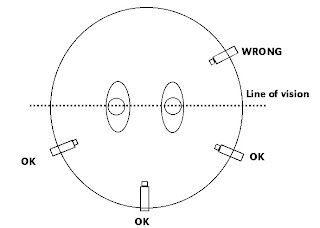
Firstly when referring to the 180 degree rule, this was achieved by making sure the object (characters) being filmed must always remain in the Center while the camera always must face the object. We ensured Keshav and Stephen didn't accidentally stand in the wrong position which may have disowned the 180 degree rule. We had to make sure we didn't break the 180 degree rule as it would have took the viewer out of the experience and confuse them, as when you break the 180 degree rule its illogical in post production. We had to make sure the camera stays in a 180 degree field and not cross the line.

Rule of thirds


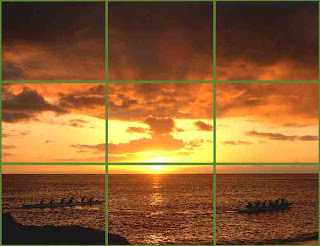
The rule of thirds is one of the imperative rules and techniques in the field of media and photographic composition and also this idea initially comes from the theory that the human eye naturally drifts towards the intersection points that occur when a picture is split into thirds. We  used this by making sure the composition of the camera was perfectly in place to match the rule of thirds. I had to ensure constantly throughout the filming that we did this.

Match on action


Match on action was achieved right at the beginning of the filming, when Stephen walks through the door. We filmed firstly the front of Stephen and then as he is walking towards the door we filmed from behind him and as he approached the door we continued filming behind him and as he entered we filmed again in front of him.

Shot reverse shot


When referring to how we used shot reverse shot, this was done when Stephen and Keshav had dialogue, where Stephen asks 'Why are you in my house' This then goes on to Keshav having a small dialogue and then back to Stephen which achieved this Shot Reverse Shot technique.


What challenges did you face during production?

Throughout production the biggest challenge was attaining the best camera shots and camera angles as it was very difficult to make it as perfect as possible when not having professional experience. Also another challenge was keeping composure when filming and making sure the camera is held still as we did not want the filming to be shaky and unprofessional. If I could film again I would ensure that my group and I would film from more angle types as there wasn't a wide variety of angle types, and when it came to editing there was a few parts that didn't necessarily go together when put together.


What challenges did you face during post-production?

In reference to post production and editing I realized that it is much harder than just simply putting together a few clips we have filmed, but rather that it is a precise mechanism of media to capture the perfect shots and scenes. The biggest challenge I faced was getting the perfect time to start and end each clip and the duration for each shot, as I didn't want to make it too short or too long, which could have either dragged along the film or made it too short and boring. I wanted the right pace and tempo for the short film to add tension. If I could edit again I would change the timing of some of the clips to make the film even more intense.

What are the overall strengths of your work?

The overall strengths of my work included; coming up with the initial idea for the short film, this was a non-generic idea that uniquely intrigues viewers & I achieved this by thinking outside the box and creating new ideas that are unusual and versatile. also another strength shown through the overall work is the setting of the film and props used in the film as seen from the editing post production. Also another overall strength was the post production also, known as the editing of the filming, the reason for this being a strength is because, I was able to match the correct shots with each other to ensure I got the best scenes for my short film. Lastly another strength was the use of direction.

What are the overall weaknesses of your work?

The overall weakness of my work would have been being able to ensure that I remember to have a wide variation of camera angles and different camera techniques, to expand the quality of the short film. Also another example of a weakness shown throughout my work, would have been developing my media knowledge in my continuity editing.